
BidaRate
Every frame is evidence.
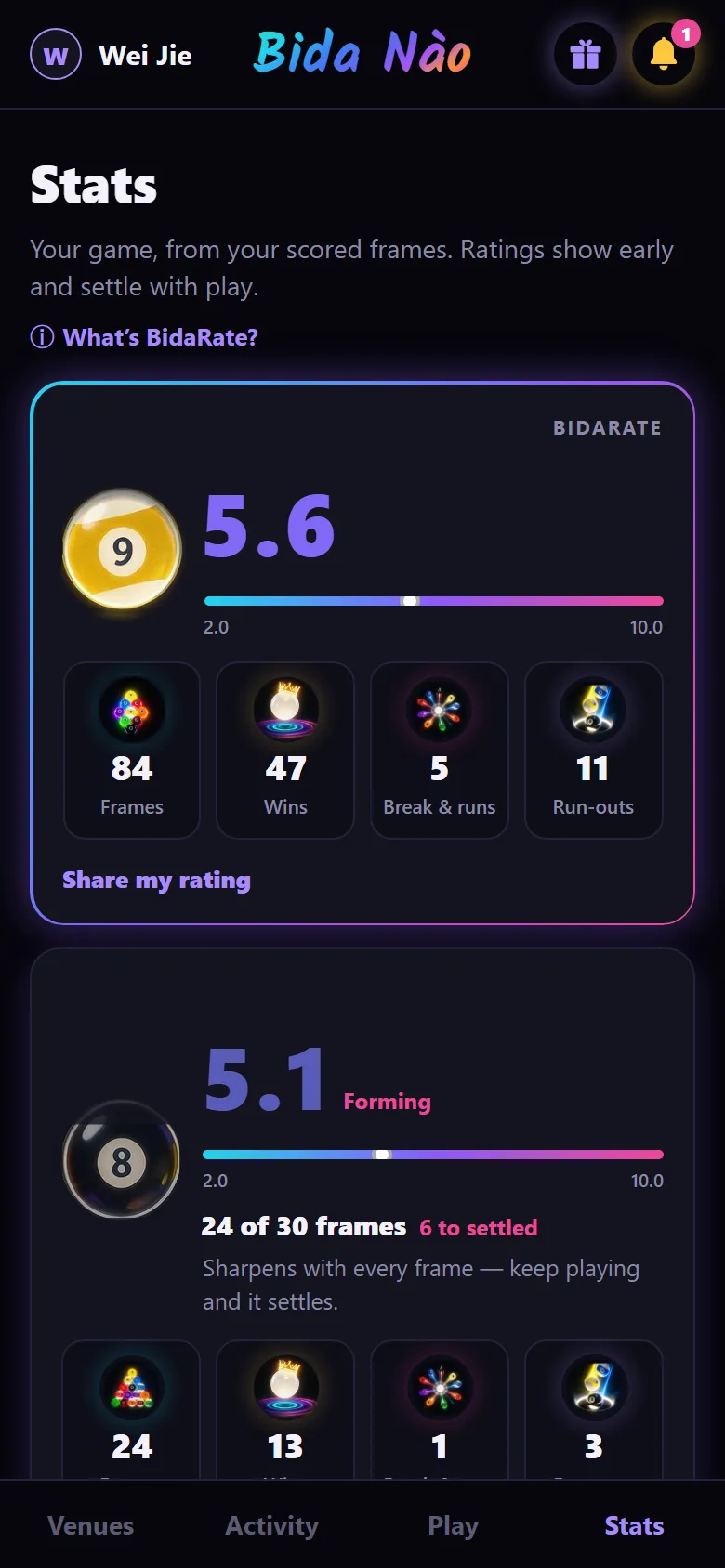
One rating per game, on a 2.0–10.0 scale, built from the frames you score in real matches. Anyone can say they’re good. This is the number that says it for you.
No self-declared levels. No handicap arguments before a game.
Why casual frames count
You can lose on purpose; you cannot fake a run-out. Every scored frame is proof of something, so no frame is “just practice.”
Hard to fake
It weighs who you beat, not just that you won, and it reads how you win. One scrappy frame never defines you: BidaRate reads patterns across many, and scores that don’t add up are flagged.
Exact by design
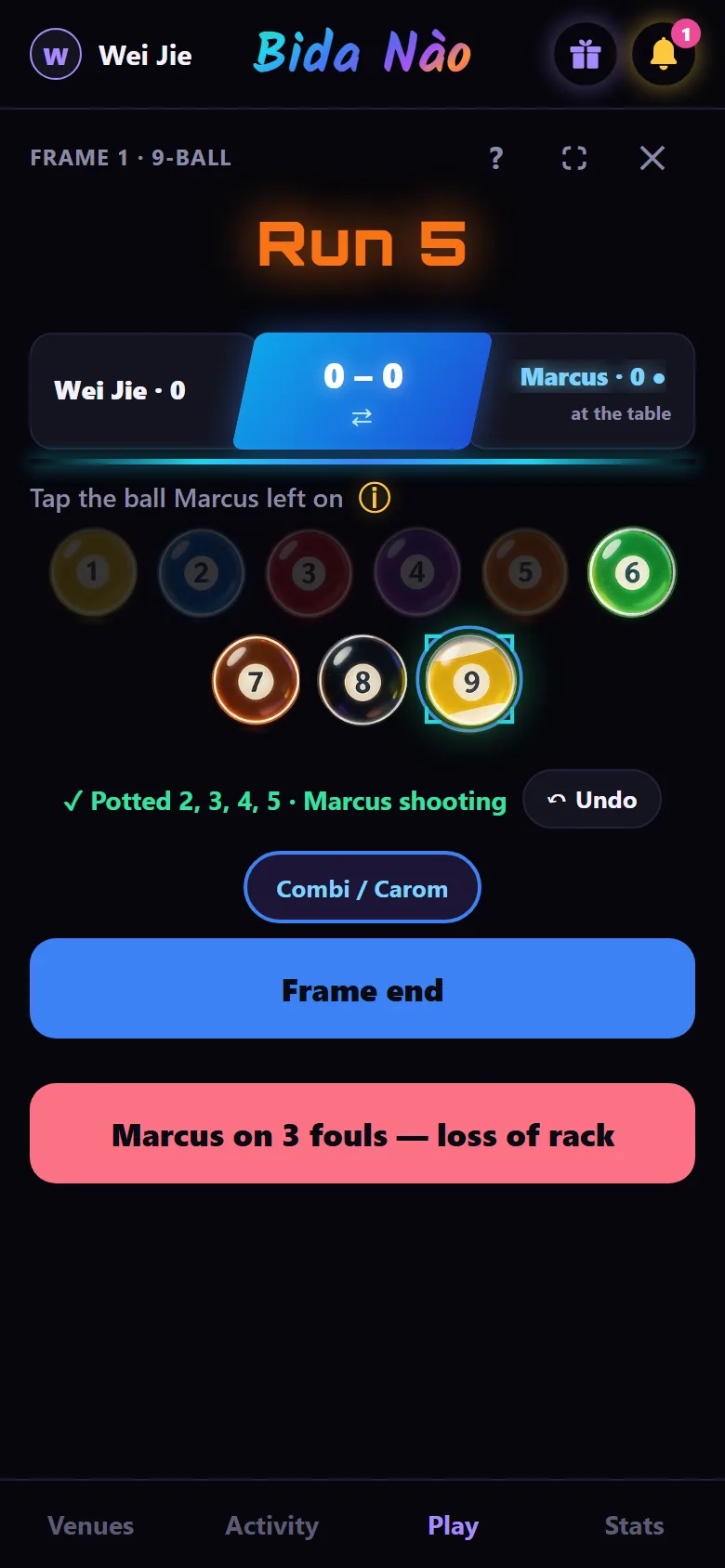
The balls fall in order, or belong to a side, so one tap records a turn precisely. A wrong tap is one Undo away, and a frame counts only once its result is confirmed.
What the number means
Rated per game — pool, heyball and snooker each earn their own number, built only from frames of that game.

Pots straightforward balls but does not yet control the cue ball. Rarely, if ever, clears a full rack. Most frames are decided by the opponent’s errors.

Pots reliably and is beginning to plan one ball ahead. Can clear a rack over several visits. A run of three to four balls marks a good frame.

Consistent potting, basic safety play, and position planned one ball ahead. A full clearance in a single visit is rare — on the order of once a season.

Competitive at local league level. Clears the rack from the first visit in roughly one frame in ten. Converts an opponent’s error reliably and plans position two to three balls ahead.

Usually clears an open table. Capable of winning two or three consecutive racks. Safety play is deliberate and tactical rather than a last resort.

Typically the strongest player in a venue. Clears from the break frequently enough that it is expected. Chances against them generally come only from their infrequent errors.

Professional-rate evidence: a break-and-run in roughly one rack in four, with the capacity to run five or six consecutive racks.

Sustains a break-and-run rate above thirty percent. A level reached by only a handful of players in any country.
The scale is absolute — a 6.0 plays like a 6.0 in every hall, and the top is earned, never given.
Forming, then settled
A rating shows as forming until enough frames stand behind it, then as settled. Confidence grows with every rated frame — fastest against players whose own rating is already settled — and keeps growing the more you play. Away for a long while, it fades slowly, slower the better you are, because well-drilled skill sticks. The number itself never falls for absence; one session brings a faded rating back.
Your hall already knows who’s better
Every hall has a pecking order that lives in the regulars’ heads. A rating makes it portable — to the next hall, the next opponent, the next bracket. See where it stands today on the Singapore leaderboard.
Coming soon
Not in the app yet.
A confidence meter
How firm your number is, shown rather than inferred. The behaviour is live today; the meter is not.
Player cards
One card per game, to keep and to show.
Everything above is in the app today.